 Image 1 of 1
Related Works
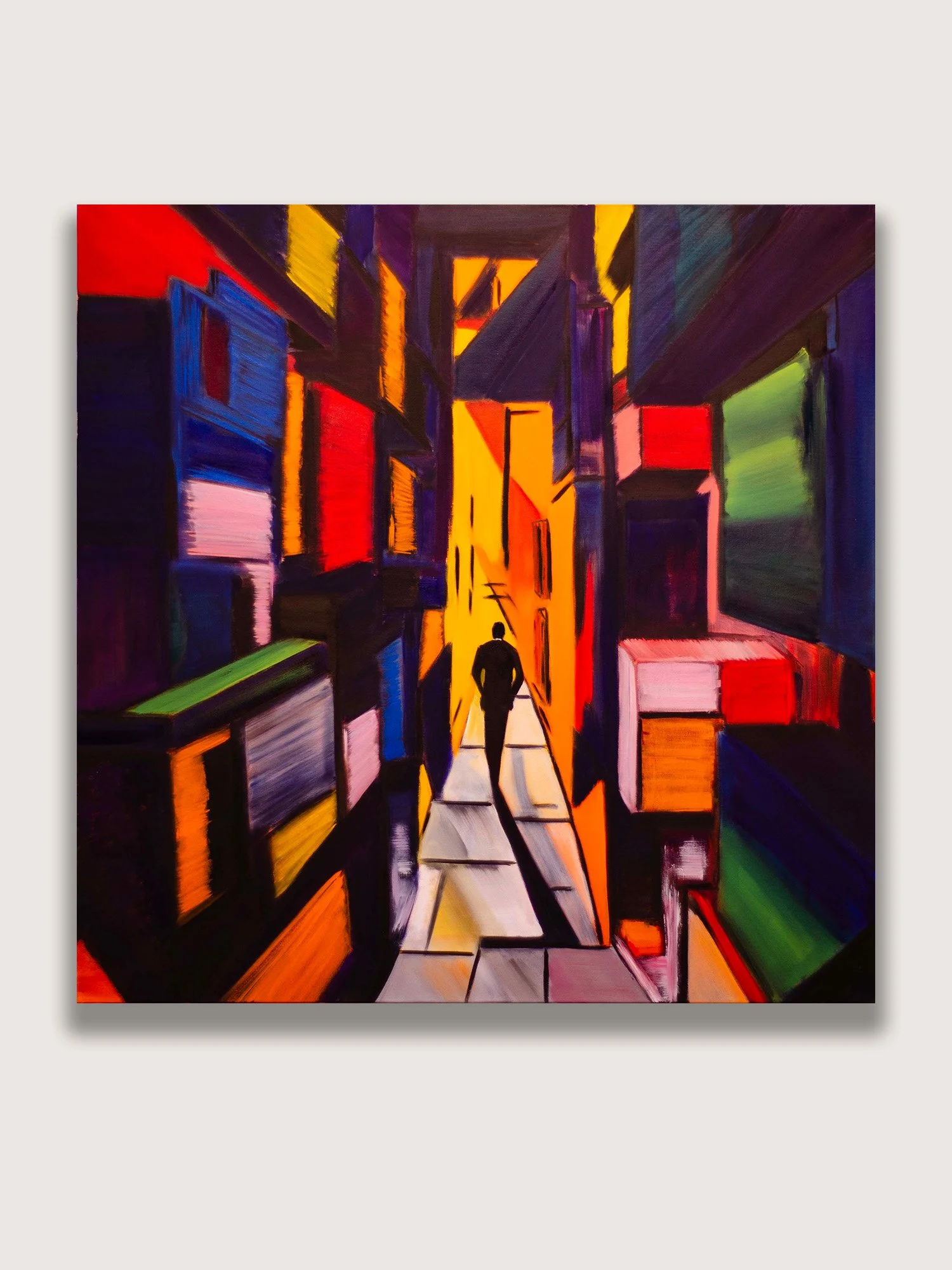
Oil on Canvas, (2026)
30 ×30 inches
Passages is a contemporary Cubist oil painting exploring movement, transition, and psychological navigation through fragmented architectural forms and shifting spatial environments. Inspired by experiences of travel, uncertainty, and unfamiliar spaces, Farron Khan uses layered perspectives and fractured geometry to reflect the emotional complexity of moving between places, memories, and states of mind. The composition blurs distinctions between physical structure and internal experience, creating an environment that feels simultaneously constructed and unstable. Through its fragmented visual language, the work examines themes of direction, disorientation, and the search for meaning within transitional moments.
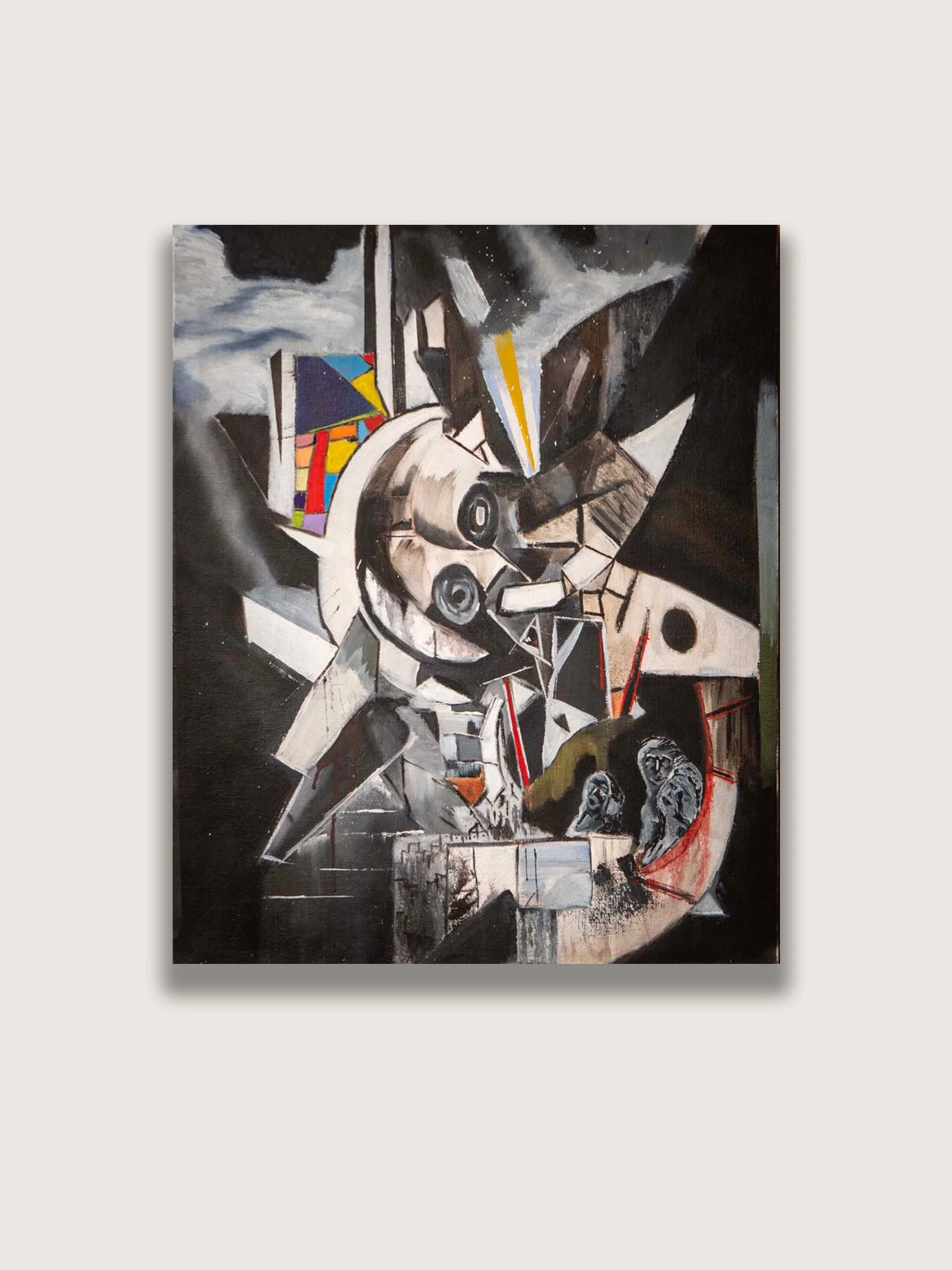
Drone Warfare (2024)
Oil on wood panel, 16 × 20 inchesDrone Warfare is a contemporary Cubist oil painting exploring surveillance, modern conflict, and the psychological distance created by military technology. Drawing in part from Farron Khan’s military background, the work examines how drones, remote observation, and digital systems reshape human perception of war, power, and accountability. Fragmented forms, layered spatial planes, and mechanical symbolism create a sense of tension between human vulnerability and technological control, while the fractured composition reflects the emotional and moral disconnection often associated with contemporary warfare. Through Cubist distortion and symbolic imagery, the painting invites viewers to consider the growing relationship between surveillance, conflict, and everyday life.
Currently available exclusively at Uncanny Valley Art Gallery.
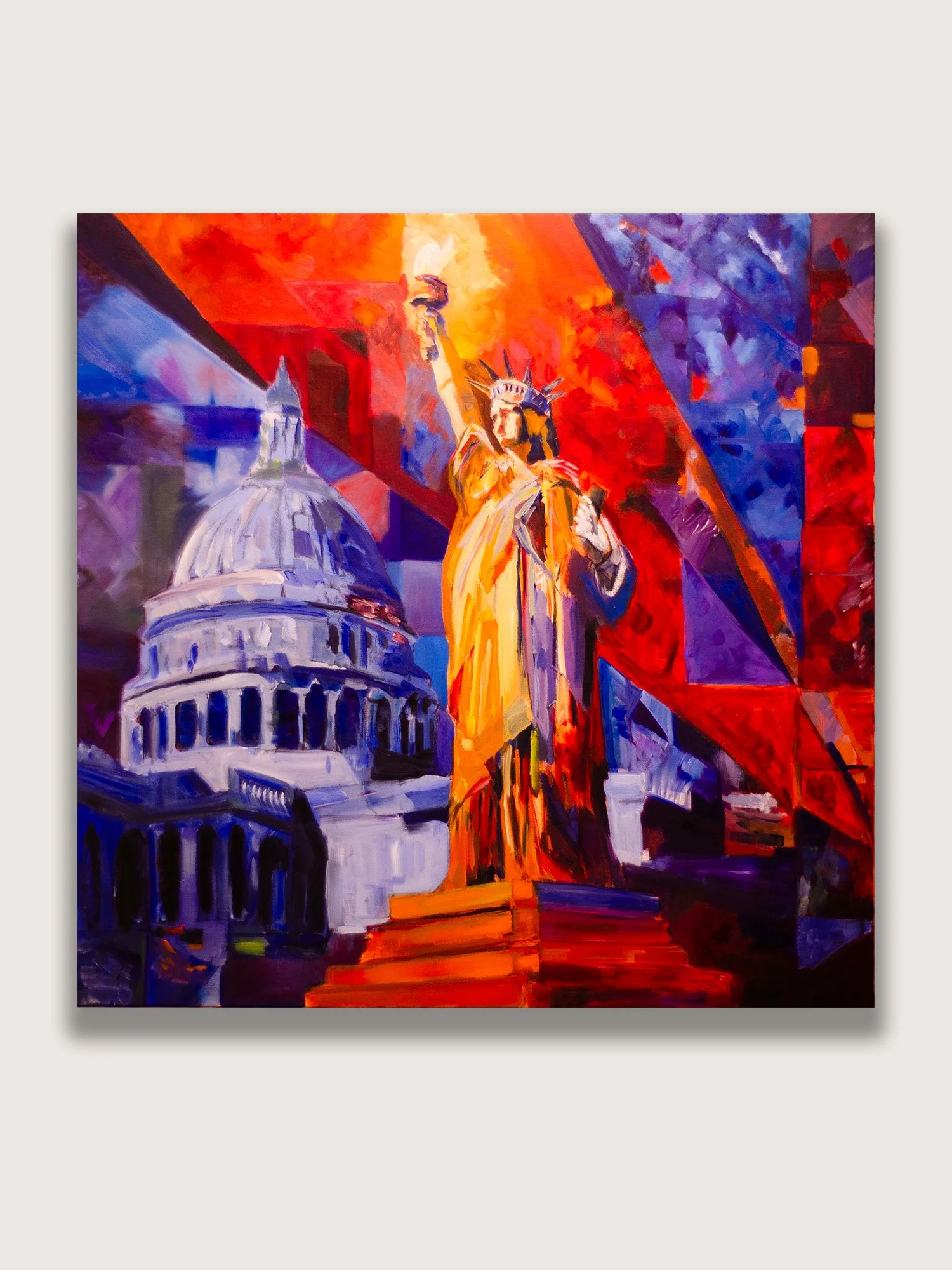
Oil on canvas, 2026
30 × 30 inches
A contemporary Cubist oil painting exploring memory, national identity, and perseverance through fragmented imagery and symbolic American iconography, Don’t Look Back! You’re Not Going That Way! reflects on uncertainty, resilience, and the tension between past and future. Influenced in part by Farron Khan’s military background and reflections on recent American history, the work uses layered color, fractured forms, and shifting perspectives to examine how hardship, debate, and collective memory continue to shape the evolving American experience. Positioned at the center of the composition, the Statue of Liberty emerges as a symbol of endurance, responsibility, and forward movement rather than retreat, inviting viewers to consider both what has been endured and what still remains possible.