Oil on canvas
30 × 30 inches
2026
Worry Dolls is a contemporary Cubist oil painting by Farron Khan that explores themes of anxiety, emotional burden, and sleeplessness through fragmented figurative forms and vivid geometric color. Inspired by the Guatemalan tradition of worry dolls—small handmade figures placed beneath a pillow to “carry” a person’s fears through the night—the painting transforms this cultural practice into a layered psychological landscape filled with tension, repetition, and quiet vulnerability.
Rendered in oil on canvas, the 30 x 30 inch composition combines Cubist abstraction with symbolic storytelling, presenting clustered figures whose lowered gazes and compressed arrangement evoke emotional exhaustion, collective stress, and the weight of persistent thought. Sharp angular planes and fractured spatial relationships mirror the mental fragmentation often associated with insomnia and chronic anxiety, while the interplay of saturated reds, blues, yellows, and deep shadows creates a visual contrast between comfort and unease.
Drawing from Cubism, expressionist painting, and symbolic figurative traditions, Worry Dolls reflects on the universal desire to externalize fear and seek rest from internal anxieties. The painting functions both as a contemporary reinterpretation of Guatemalan folk tradition and as a meditation on mental overload, emotional resilience, and the search for psychological relief in an increasingly overstimulated world.
Oil on canvas
30 × 30 inches
2026
Worry Dolls is a contemporary Cubist oil painting by Farron Khan that explores themes of anxiety, emotional burden, and sleeplessness through fragmented figurative forms and vivid geometric color. Inspired by the Guatemalan tradition of worry dolls—small handmade figures placed beneath a pillow to “carry” a person’s fears through the night—the painting transforms this cultural practice into a layered psychological landscape filled with tension, repetition, and quiet vulnerability.
Rendered in oil on canvas, the 30 x 30 inch composition combines Cubist abstraction with symbolic storytelling, presenting clustered figures whose lowered gazes and compressed arrangement evoke emotional exhaustion, collective stress, and the weight of persistent thought. Sharp angular planes and fractured spatial relationships mirror the mental fragmentation often associated with insomnia and chronic anxiety, while the interplay of saturated reds, blues, yellows, and deep shadows creates a visual contrast between comfort and unease.
Drawing from Cubism, expressionist painting, and symbolic figurative traditions, Worry Dolls reflects on the universal desire to externalize fear and seek rest from internal anxieties. The painting functions both as a contemporary reinterpretation of Guatemalan folk tradition and as a meditation on mental overload, emotional resilience, and the search for psychological relief in an increasingly overstimulated world.
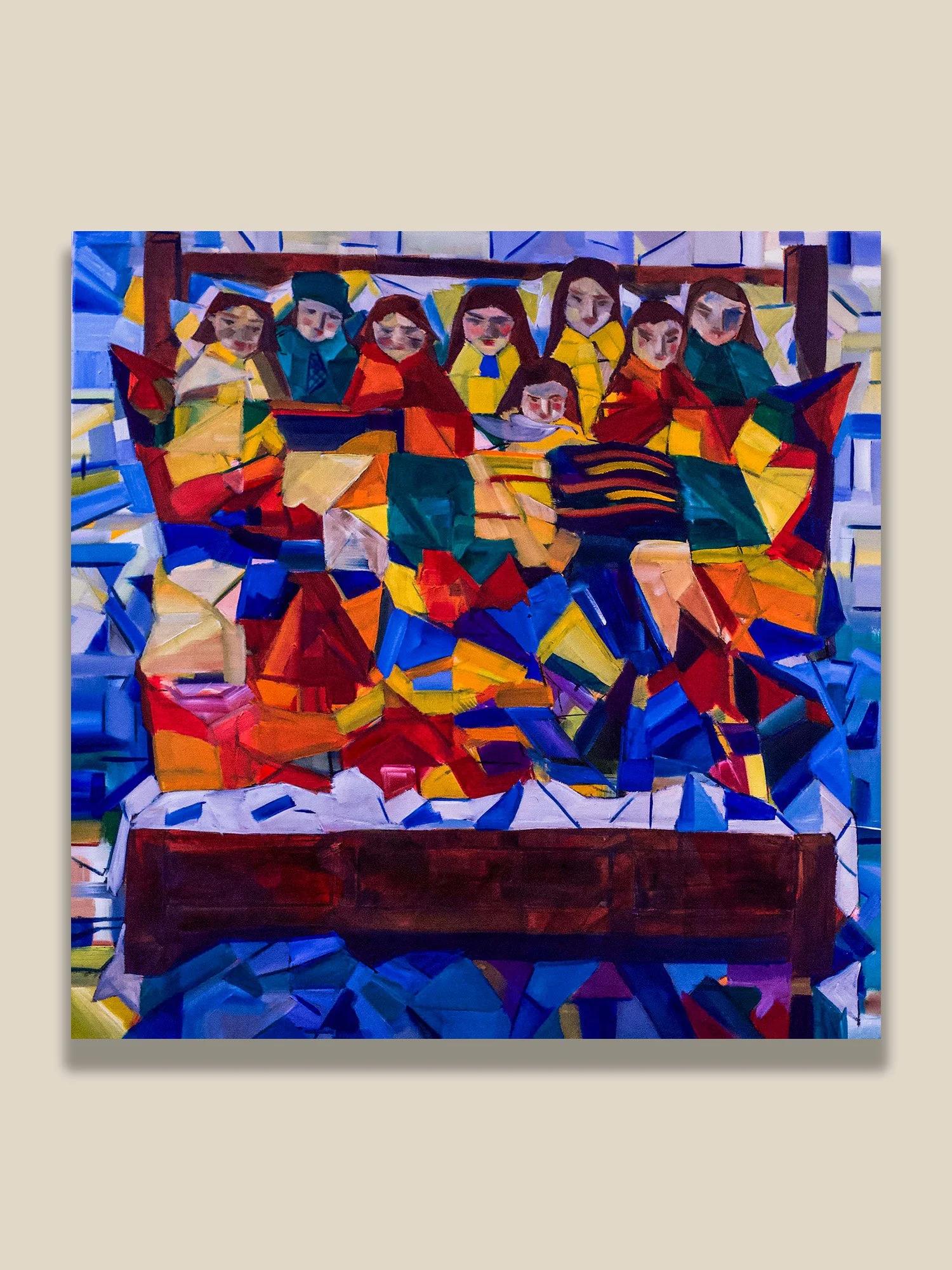 Image 1 of 1